
Harry Hood
| Originally Performed By | Phish |
| Appears On |
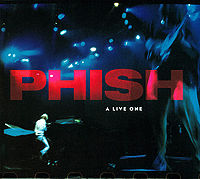
|
| Music/Lyrics | Anastasio/Gordon/Fishman/McConnell/Long |
| Vocals | Trey (lead), All (backing) |
| Phish Debut | 1985-10-30 |
| Last Played | 2026-01-31 |
| Current Gap | 0 |
| Historian | Phillip Zerbo (pzerbo) |
| Last Update | 2019-02-09 |
History
In 1985, Mike, Fish, Page and friend Brian “Miles” Long lived in a house on King Street in Burlington, directly across from a regional Hood bottling plant. The plant’s pair of huge milk tanks bore Harry’s smiling face, his grin illuminated at night by streetlight. “Harry Hood” was inspired by its namesake, the signature character of the Hood dairy company’s advertising campaigns. The little animated milkman in the fridge would proudly rattle on about his company’s dairy products when the “unsuspecting” folks opened their icebox doors. But what happened to Harry when the refrigerator door closed? Brian Long was the first to ask the question that has passed the lips of virtually every Phish fan. “Harry! Harry! Where do you go when the lights go out?”
”Harry Hood” Phish “commercial”When Trey and Fish travelled to Greece in the summer of ‘85, they experienced a tumultuous series of events involving a sea storm, a capsized raft, and lots of super-clean “chemists’ reserve” LSD. Following their return to safety, Trey wrote several chunks of new music inspired by the adventure. Back at the King Street house, a former tenant apparently named Mr. A. Miner was still receiving mail. One piece caught the band’s collective eye, a form letter bursting at the seams with Miner’s name, telling him, “Thank You, Mr. Miner.” It is from these relatively nondescript circumstances that one of Phish’s most beloved songs was born.
”Harry Hood” – 5/20/87, Shelburne, VT“Harry Hood” debuted at Hunt’s on 10/30/85. Early versions are ironically more exploratory in the “intro” than in the “jam.” The epic Ian’s Farm (8/21/87) outing took over seven minutes to get to the jam itself. Fans of early Phish will want to visit 11/19/87, 7/23/88, 5/28/89, 5/6/90, 11/30/91, and 5/17/92 to see what “Harry” was capable of in the early years. 1993 was a critical, transformative year for Phish, yielding four incredibly strong versions of “Hood”: 3/21/93 Ventura, 8/8/93 Cleveland, 8/15/93 Louisville, and 12/31/93 Worcester. One “Harry” from this era that simply cannot be missed is 4/18/92, the beautiful and now legendary “Linus and Lucy” version that contains an extended homage to Vince Guaraldi’s Peanuts music.
Continuing to grow as a song and jam vehicle, “Harry” truly soared on the fall ‘94 tour. The most notable of these – 10/20/94 St. Petersburg, FL, 10/23/94 Gainesville, FL (on A Live One), and the stunning 11/12/94 Kent, OH – continue to thrill listeners. Great versions abound in the middle ‘90s, including 7/1/95 Great Woods, 10/7/95 Spokane, WA, 12/5/95 Amherst, MA, 11/23/96 Vancouver, BC, and 8/10/97 Deer Creek.
”Harry Hood” – 11/2/96, West Palm Beach, FL from the Coral Sky DVDThe Red Rocks “Hood” on 8/6/96 gave birth to the crowd response of “Hood!” following the band’s shoults of “Harry!” The “Hood” response was inspired by fliers detailing audience participation activities for the crowd to engage in during particular songs, and has become a fixture in the song to this day. More incredible was the night of 8/17/97 at The Great Went. Toward the end of an epic second set, the band had introduced the now-legendary art-sculpture and its vision as a true artistic collaboration between the band and fans. The fans reciprocated during the “Hood” jam with an indescribable shower of glowsticks. At The Gorge on 8/2/97, Trey had Chris Kuroda turn off the stage lights during “Harry” so everyone could enjoy the jam in the beautiful, unadorned, natural surroundings. This was repeated on 8/17/97, but then the unexpected happened. A few fans began to toss their glowrings and glowsticks around, creating beautiful colored arcs of glowing light that danced above the crowd. More fans followed suit, until there were so many glow things flying around the crowd that the air looked like the Northern Lights. The tossing of glowsticks became a regular – and controversial – practice at subsequent shows, but this night remains special to all who attended.
”Harry Hood” – 10/17/98, Mountain View, CAAfter The Great Went and up to the band’s hiatus, “Harry” suffered from a mid-life crisis of sorts, taking on on a different, muted character from the more excitable versions of years past. Nevertheless, many notable versions exist from this period: 11/22/97 Hampton (follows a strong “Mike’s Groove” show opener); 12/13/97 Albany (in a fun but short-sighted twist, Trey started throwing glowsticks back at the audience); 10/17/98 Bridge School (acoustic, with Neil Young); 12/31/98 MSG (throbbing digital-loop intro); 12/11/99 Spectrum (a rare show-opening appearance); 6/22/00 (highly irregular version with fiddles, mandolins, and banjos); and 9/9/00 (with Michael Ray).
Phish 2.0 was a period of renewed vitality and experimentation for “Harry.” Less frequent were the glowstick “battles,” as fans seemed to have collectively outgrown the phase, allowing a renewed focus on the potential majesty of the jam. The return gig on 12/31/02 at MSG had fans marveling at the song’s revitalized presence. Excellent versions can be found on 2/28/03 (punctuating one of the most popular shows in Phish history), 7/25/03 (nearly a half-hour long and widely considered the most experimental version ever), and 7/31/03 (twenty-four minutes and highly innovative, if not universally praised).
”Harry Hood” – 8/5/13, Hollywood, CAPhish’s return to the stage in 2009 saw “Harry” in its usually prominent position in the repertoire. 6/2/09 at Jones Beach featured an extended ambient-space jam; while not loved by all, this segment is notable more for its length during a period where performances were comparatively interchangeable and straightforward. The 8/5/13 Hollywood Bowl rendition sits at the other end of the improvisational spectrum, offering up an extended passage of melodic hose before dropping back into the “Hood” finale. Other strong versions from this period include: 8/7/10 Greek Theatre; 6/4/11 Blossom (with a “Have Mercy” sandwich); 9/4/11 Dick’s; and 12/30/12 MSG.
Phish wasted no time setting a high bar for “Harry” in 2014, unleashing a monster 18-minute version at the tour-opening gig on 7/1/14 at Great Woods. The two major “big field” events of 2014 saw “Harry” deliver in the biggest moments, on 7/12/14 at Randall’s Island, and 7/19/14 in Chicago. The rare west coast edition of fall tour offered perhaps the year’s best “Hood” on on 10/28/14 in San Francisco, an exploratory ride through multiple themes including “Party Time” and “The Dogs,” a song that wouldn’t debut in earnest until later in the week. Thirty years after its debut “Harry” continues to thrill listeners with power, innovation, and grace, with excellent offerings on 7/24/15 Shoreline, 8/21/15 Magnaball, and 1/16/16 Riviera Maya, Mexico.
The future still seems bright for “Harry,” even (and especially) when the lights go out.
”Harry Hood” – 7/1/14, Mansfield, MA. Video © Phish.
 Phish.net
 The Mockingbird Foundation